Treviso hides its best details in plain sight. This 2.5-hour small-group walking tour takes you through Treviso’s elegant squares, palaces, arcades, and canals while a local guide connects the city’s history to the strange symbols and legends you’d likely miss alone. I especially like how the walk mixes famous spots with offbeat corners, so the city feels both recognizable and newly interesting.
Two things I really like: first, the way the guide ties everyday sights to stories, including ghost legends and odd little details on buildings. Second, the photo-friendly route along canals, fountains, and scenic viewpoints means you’re not just reading about Treviso, you’re seeing it from the best angles.
One consideration: it’s an outdoor, mostly walking experience, with frequent quick stops. If you need lots of long breaks, plan for that, and wear comfortable shoes.
In This Review
- Key Highlights You’ll Feel Immediately
- Meeting at Ponte dell’Università: get your bearings fast
- Lodge of Knights: the first clue that Treviso likes stories
- Photo stop after Photo stop: the art of noticing symbols
- Canale dei Buranelli and a short break: water views you’ll remember
- Piazza San Vito: Treviso’s square energy without the crowd pressure
- Piazza dei Signori: the iconic square for your Treviso photos
- Fontana Delle Tette: a weird fountain stop that makes Treviso memorable
- Treviso Cathedral: sightseeing plus context, not just a quick glance
- More hidden and secret stops: legends you can spot in the streets
- Porta San Tomaso: ancient walls energy in one focused stop
- Isola della Pescheria: a waterside scene that feels like a chapter
- The last hidden photo stop and Ponte Dante
- Price and value: $58 for a 2.5-hour story-led walk
- Who this Treviso walk suits best
- Should you book this Treviso tour?
- FAQ
- How long is the Treviso small-group walking tour?
- Where do we meet for the tour?
- What is included in the tour price?
- Is the tour guide tip included?
- What languages are available for the live guide?
- What should I bring?
- Is free cancellation available?
- Is there a reserve now, pay later option?
Key Highlights You’ll Feel Immediately
- Licensed local guidance with a Ministry-issued identification badge and a Beescover sign at the start
- Story stops built around legends, curiosities, and mysterious symbols on facades
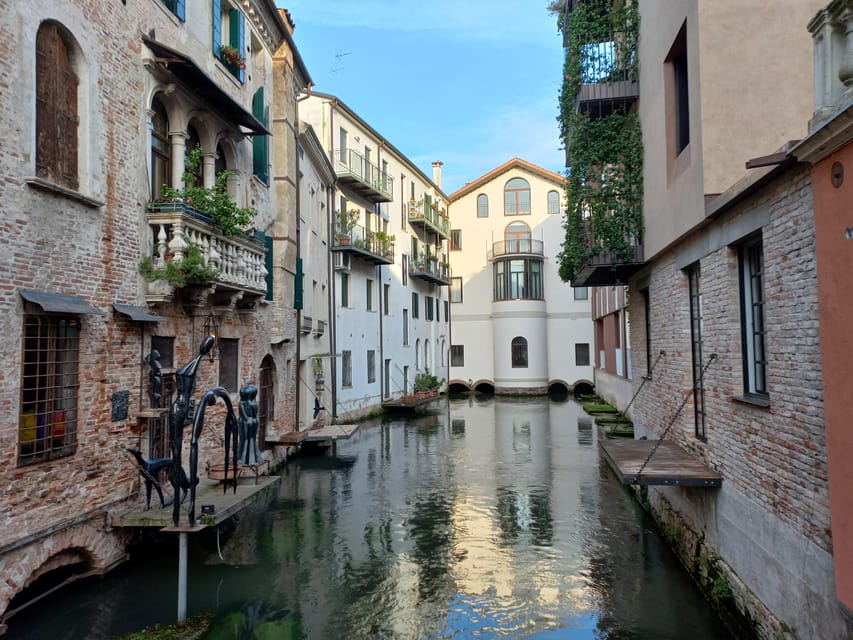
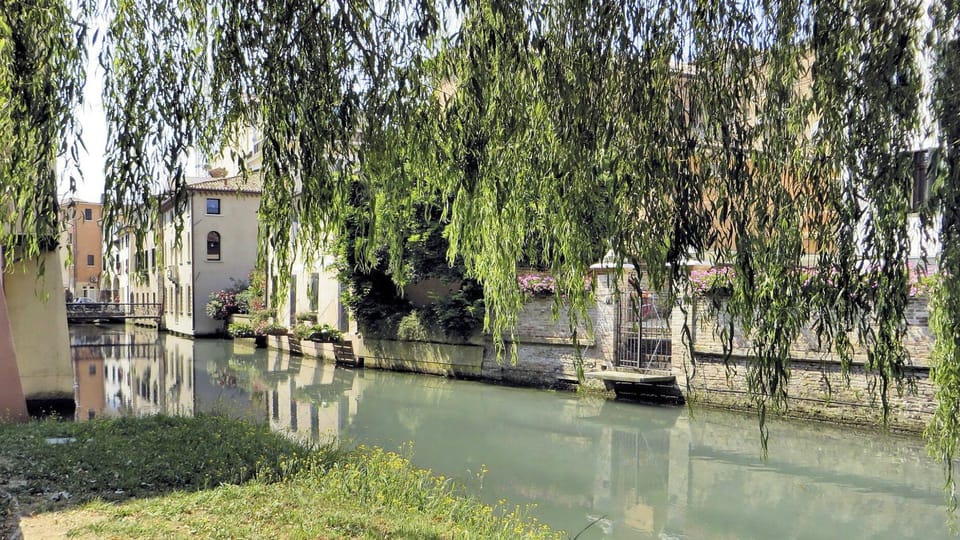
- Canal and bridge photo moments, including places where palaces reflect in the water
- Multiple picturesque squares such as Piazza dei Signori and Piazza San Vito
- Water- and walls-related history, with references that include old mill wheels and ancient city walls
- A relaxed 2.5-hour pace designed for an intimate group experience
Meeting at Ponte dell’Università: get your bearings fast
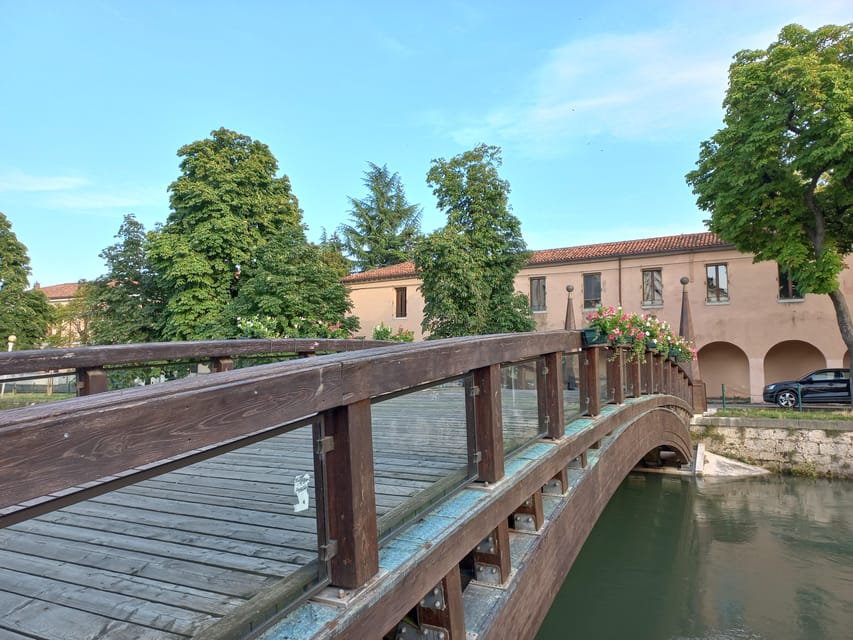
The tour starts at Ponte dell’Università, near the riverfront area by Riviera Garibaldi. You’ll spot the guide using the Beescover sign, and you’ll also see the identification badge required for guides in Italy, issued by the Italian Ministry of Tourism. That’s reassuring on a first-time city walk.
From the first minutes, the goal is clear: you’ll learn how Treviso’s historic center is laid out, and you’ll connect what you’re seeing to why it exists here in the first place. You’re not just walking “from landmark to landmark.” You’re getting a route that helps you notice patterns: water channels, arcaded corridors, and the way squares act like outdoor living rooms.
It helps that the tour is designed for a small group, because you can ask questions and get quick clarifications without the usual scramble. I also like that the guide speaks English, Spanish, and Italian, so you’re less likely to miss nuance if your group language is one of those.
You can also read our reviews of more walking tours in Treviso
Lodge of Knights: the first clue that Treviso likes stories
Right after meeting, the tour visits the Lodge of Knights. It’s a short stop, but the timing matters: you get a quick foundation for how the city’s past shows up in its present look and feel.
This is the kind of location where a guide can do real work. Even if you know Italy has medieval layers, Treviso has its own character, and the stories help you spot what’s intentional versus what’s just decorative. Expect the guide to frame the city’s growth and power—how Treviso became itself over time—so the next stops feel connected instead of random.
If you’re the sort of person who likes architecture with context (not just photos), this first segment sets the tone well. The only drawback is that it’s brief, so arrive ready to look closely and listen for the detail cues the guide points out.
Photo stop after Photo stop: the art of noticing symbols
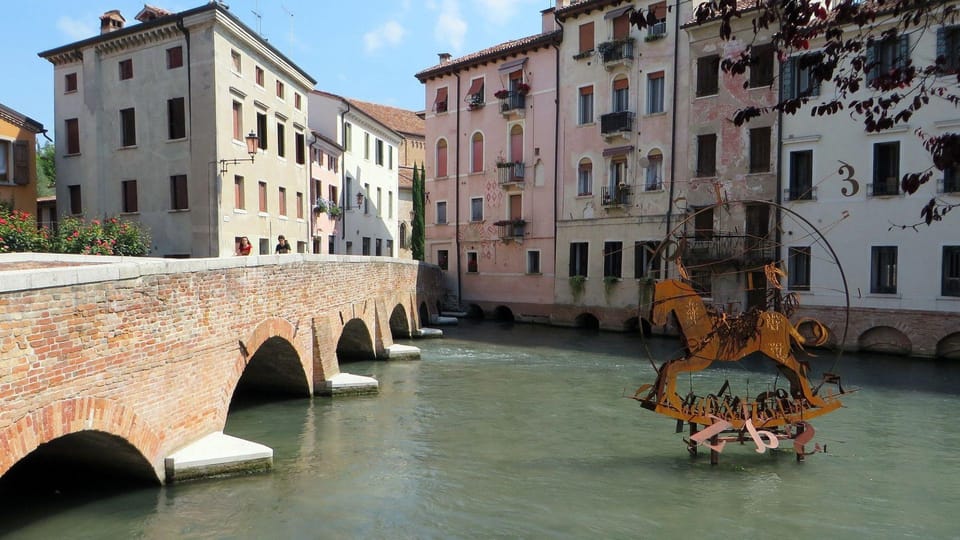
After the Lodge of Knights, the itinerary switches into a rhythm: short hidden and secret stops that include quick photo moments. You’ll spend several 10-minute intervals on unusual viewpoints and overlooked corners.
This is where you learn how Treviso “talks.” The guide looks for the little signals—mysterious symbols, quirky architectural touches, and places connected to eccentric personalities. You’ll also hear about locations that show up in ghost legends, which makes the old streets feel slightly haunted in the best way.
For planning: these are typically brief pauses, not long museum-style breaks. If you like to linger and you’re traveling slowly by nature, keep your expectations aligned with the tour’s pace. I found that this fast-stop style actually works well in Treviso, because the city is compact and the most interesting details are often near street level.
Bring your camera-ready posture. You’ll want your eyes up for facades and down for canal edges and walkway textures.
Canale dei Buranelli and a short break: water views you’ll remember
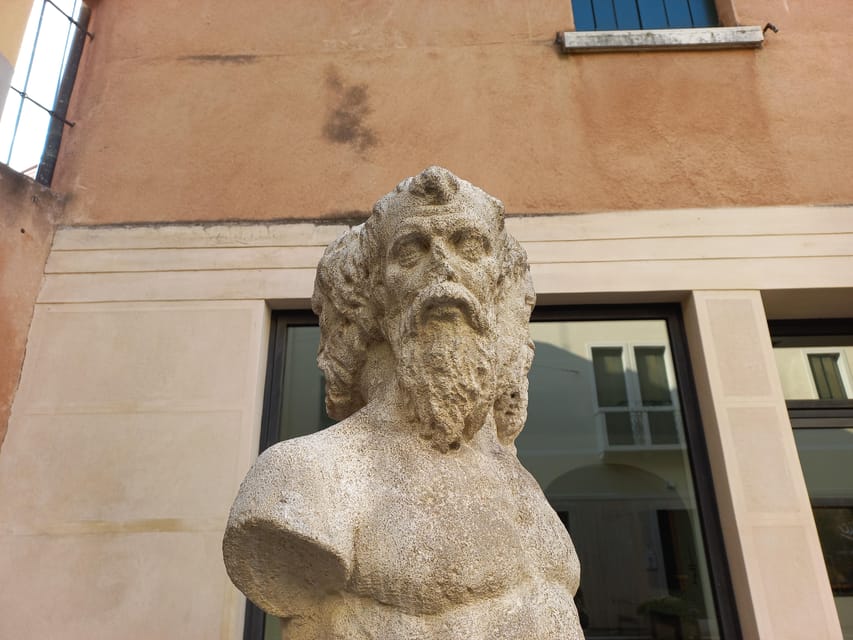
One of the most relaxing parts of the walk is Canale dei Buranelli. The tour includes a break time plus a photo stop here, which is perfect because you can breathe, reset, and watch the water for a moment rather than constantly moving.
This canal segment is also visually satisfying: you’ll see how palaces and streets play off the water. Even if you think you’ve “seen canals in Venice,” Treviso gives you a calmer, more local feeling. The focus isn’t only on the scenery—it’s on how Treviso’s water network shaped daily life.
As the guide connects history to these canals, you may hear references to older city life, including old mill wheels that once helped animate parts of the city. Whether you already know about milling traditions in Northern Italy or not, the guide’s framing helps you understand why Treviso’s waterways weren’t just pretty—they were practical.
The main consideration here is weather. Since it’s outdoors, a light rain or strong sun changes the experience. If you bring water and wear comfortable shoes, you’ll handle it fine.
Piazza San Vito: Treviso’s square energy without the crowd pressure
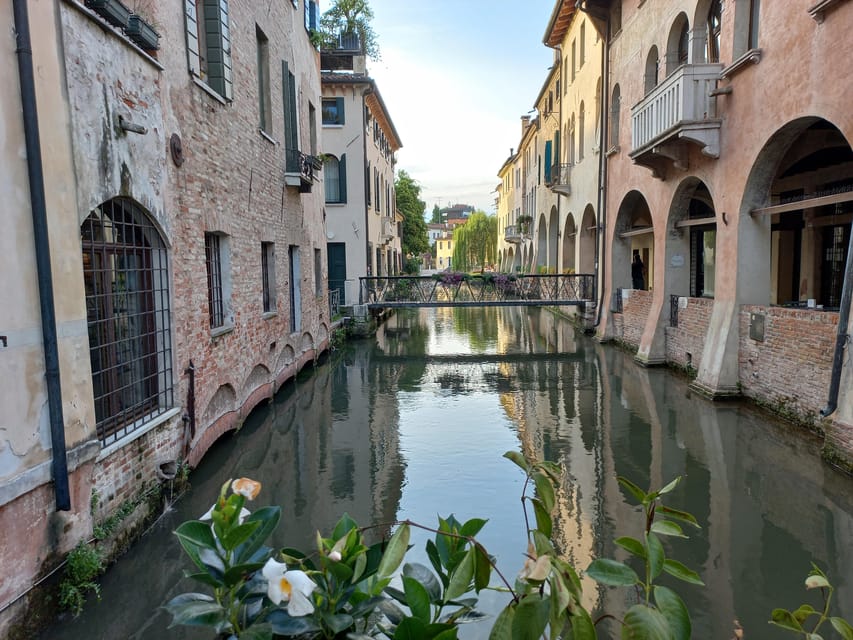
Next up is Piazza San Vito. Another short stop, but squares are where Treviso becomes easy to read. In a few minutes, you’ll usually notice how buildings frame the space and how arcades or nearby facades create sheltered routes when the weather shifts.
I like this stop because it feels like a pause in the middle of storytelling. The guide can discuss the city’s development—from its founding to the present—without the constant redirect of moving between tight alleys. It’s a good spot to absorb the city’s rhythm.
If you’re the type who enjoys street-level atmosphere, you’ll likely like Piazza San Vito for its human scale and for how it sets up the next major photo moment at Piazza dei Signori.






Piazza dei Signori: the iconic square for your Treviso photos
Then the tour brings you to Piazza dei Signori, Treviso for a photo stop. This is one of those places you’ll probably recognize the moment you arrive. It’s the kind of square built for important gatherings, where architecture communicates civic pride.
What makes the visit worth doing on a guided walk is the attention to details. You’re not only getting the obvious skyline view; you’re getting small context points that help you read the square like a document. That can include how symbols and building details connect to eras of power, art, and culture.
If your main goal is “I want the Treviso postcard,” this is where you’ll aim your camera. But if you also want the human story behind the stones, the guide helps you connect what’s visually impressive to why it matters.
Fontana Delle Tette: a weird fountain stop that makes Treviso memorable
One of the most interesting pauses on the tour is at Fontana Delle Tette. It’s brief, but memorable because it’s unusual. You’ll get your photo moment here and a bit of interpretation so you don’t just see a quirky fountain—you understand why it sticks in people’s minds.
I like stops like this because they show Treviso isn’t trying to be solemn all the time. Northern Italian cities often carry centuries of humor, symbolism, and local identity in street art, fountains, and carved details. A guided explanation helps you appreciate that tone rather than just finding it random.
It’s a fast stop, so don’t expect a long conversation. Still, it’s exactly the kind of detail-based city experience that rewards paying attention during the whole walk.
Treviso Cathedral: sightseeing plus context, not just a quick glance
The itinerary includes Treviso Cathedral for a photo stop and sightseeing. Another 10-minute window, but the guide uses it to connect the cathedral to broader city identity and historical change.
Cathedrals are big. In a standalone visit, you can end up wandering without direction. In a short guided stop, the value is that you learn what to look for immediately. That might include how Treviso’s religious and cultural life developed over time, and how the city’s later history shaped what you see today.
The best way to enjoy this stop is to focus on a few features the guide points out—especially those that connect to the theme of the walk: how Treviso became Treviso.
The drawback? If you were hoping for deep interior time, this tour is built for outdoor movement. You’ll see the cathedral from the right perspective, but you’re not getting a long, inside exploration here.
More hidden and secret stops: legends you can spot in the streets
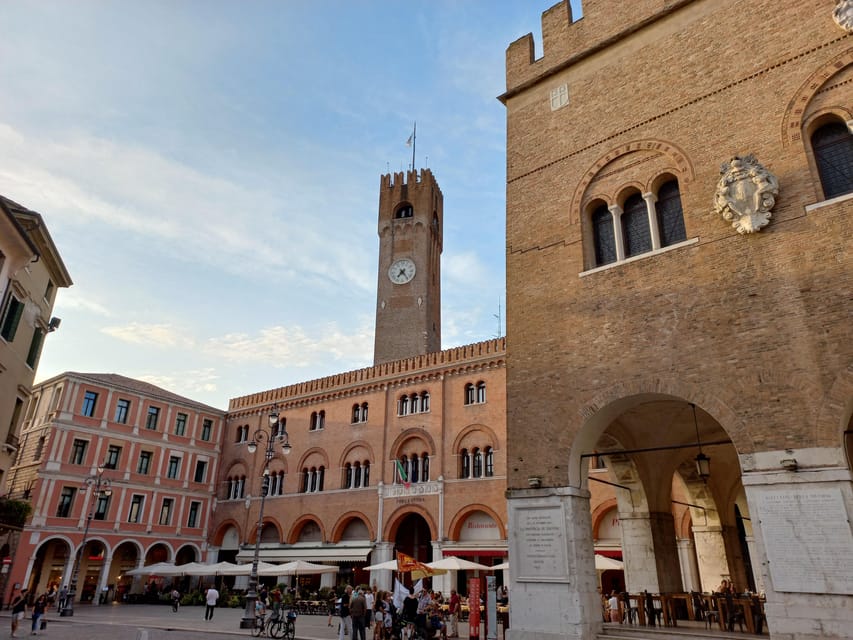
After the cathedral, the tour keeps moving through additional hidden and secret photo stops. This section is designed for story texture: quirky architecture, overlooked corners, and locations tied to legends—including ghost stories.
This is where the walk feels most “local.” When someone knows the city, it’s not just that they point out landmarks. They help you recognize themes. You start seeing patterns: odd symbols reappearing in different ways, building features that hint at past characters or events, and small street features that you’d otherwise glide past.
If you like “how did they think about this” questions, this part delivers. If you prefer strict structure and dislike detours, the naming of stops as hidden/secret may feel like playful teasing rather than precision. Still, the tour keeps them short, so you remain on track.
Porta San Tomaso: ancient walls energy in one focused stop
Next comes Porta San Tomaso. It’s a visit stop and a turning point in the route, because city gates are where Treviso’s defensive history becomes tangible.
Walls and gates tell a different story than squares and canals. They’re more about movement—how people entered and left, how the city protected itself, and how priorities changed over centuries. On this tour, it’s another place where the guide ties what you see into the bigger timeline from Treviso’s founding to its modern look.
I also like that this segment balances the visual emphasis: earlier you had fountains and plazas. Here you shift to fortification mood, which helps the walk feel like a full city portrait rather than a list.
Isola della Pescheria: a waterside scene that feels like a chapter
Then you arrive at Isola della Pescheria, with another photo stop and visit. “Isola” here signals an island-like water setting, and the setting itself makes it easy to understand Treviso’s relationship with water.
This is one of the stops where canal life becomes immediate. You can almost imagine how daily routines used the water network. The guide’s storytelling continues that connection, so even if you don’t have local knowledge, you’ll grasp why this area mattered.
You might notice practical details tied to the city’s waterfront culture—again, without needing a deep dive into an indoor museum. The tour is built to keep you outdoors, looking, and listening.
The last hidden photo stop and Ponte Dante
The tour includes another hidden photo stop before finishing at Ponte Dante for a photo stop and visit. Ponte Dante works like a grand punctuation mark. It gives you a final, photogenic view and helps you close the loop on the route you’ve walked.
Bridges are also a smart way to end a water-focused story. They force your eyes to connect both sides—buildings, canals, and the way Treviso’s historic center is stitched together.
From there, you return to Ponte dell’Università, completing the loop. By the end, the city should feel more legible: less like random streets and more like a planned system of squares, water routes, and historic corridors.
Price and value: $58 for a 2.5-hour story-led walk
At $58 per person for about 2.5 hours, you’re paying for a licensed guide and a focused route with lots of short, purposeful stops. The value here isn’t a long list of major monuments. It’s the quality of interpretation—legends, unusual details, and context you don’t get when you wander without help.
This tour is strongest if you enjoy:
- learning how history shows up in the streets
- taking photos from the best angles (canals, squares, bridges)
- hearing curiosities like symbols and ghost legends that make the city feel alive
If you prefer solo freedom and longer stays at each place, you might find this format too structured. But if you want an efficient way to understand Treviso’s historic center in one afternoon, the timing and guided storytelling are a solid deal.
Who this Treviso walk suits best
This experience is a great fit if you’re visiting Treviso for the first time and you want more than just sightseeing. It’s also ideal for couples or small groups who like a guided route but still want the walk to feel personal and relaxed.
Languages matter too. You can go in English, Spanish, or Italian, and that helps you get the full meaning of the legends and symbols rather than catching only the basics.
And if you’re the kind of person who likes the “why is that there?” question, you’ll enjoy how the guide explains connections between Treviso’s founding story and its present-day layout.
Should you book this Treviso tour?
I’d book it if you want an efficient, story-driven walk through Treviso’s historic center, with lots of photo-friendly canal and square moments and plenty of interpretation on the small details. It’s also worth it if you like the idea of hearing legends, curiosities, and overlooked architectural touches from a guide who can connect them to the city’s timeline.
Skip it if you want long museum time, deep interior visits, or a slow stroll with minimal structure. This one is about a well-paced 2.5 hours outdoors, with quick stops that keep the city moving and the stories coming.
FAQ
How long is the Treviso small-group walking tour?
It lasts 2.5 hours.
Where do we meet for the tour?
Meet on Ponte dell’Università, near street Riviera Garibaldi in Treviso, where the guide shows a Beescover sign.
What is included in the tour price?
You get a licensed tour guide and an outdoor walking tour.
Is the tour guide tip included?
No. Tour guide tip is not included.
What languages are available for the live guide?
The live guide is available in English, Spanish, and Italian.
What should I bring?
Bring comfortable shoes and water.
Is free cancellation available?
Yes. You can cancel up to 24 hours in advance for a full refund.
Is there a reserve now, pay later option?
Yes. You can reserve your spot and pay later.