REVIEW · TREVISO
Treviso City Escape: “Blood red love”
Book on GetYourGuide →Operated by BelPaese Express · Bookable on GetYourGuide
A murder mystery, solved on foot in Treviso. The Treviso City Escape called Blood red love turns a simple stroll into a clue hunt, led by investigator Lorenzo Potassa and built around uncovering the hidden corners of the city through art and street-level questions. You’re not just looking at Treviso—you’re using it.
I like the self-guided setup a lot. You only need a smartphone, a digital map, and the mission app, and you can play at your own pace without waiting on a guide. I also love the way the story stays light and interactive: solve riddles, find “treasures,” and keep your eyes moving across the facades, signs, and details that make Italian towns feel like living museums.
The one drawback to plan around is the human factor at the starting point. If Piazza Pola is crowded, it can make the beginning feel like a scavenger hunt in a busy square—and one puzzle question about an image can feel a bit unclear if you’re searching for a specific wording (so read carefully, and don’t be shy about using hints).
In This Review
- Key things I’d clock before you go
- Blood red love: the mystery that drives the walk
- How the self-guided smartphone mission really works
- Starting in Piazza Pola: where your mission begins
- The walking route: what 2.5 km feels like in Treviso
- Hints, solutions, and how not to get stuck
- Art cues you’ll actually notice while you play
- Final prize: part fun, part reality check for expectations
- When you can play (and what happens during closures)
- Price and value for a group of up to 5
- Who this Treviso City Escape fits best
- Should you book Treviso City Escape Blood red love?
- FAQ
- What is Treviso City Escape Blood red love?
- Where does the experience start?
- How long does it take?
- What equipment do I need?
- Do I need the internet to play?
- When can I play the mission?
- Is there a guide or supervisor with you?
Key things I’d clock before you go
- A crime-of-love storyline: a young peasant girl, a billhook, and the big question of whether the death was really guiltless
- Smartphone-only play: web isn’t necessary, and the mission includes a map in the app
- You get three hints plus the solution: built-in help so you don’t stall out for hours
- 2.5 km walking loop with a flexible feel (no time limit)
- Self-guided, no staff on site: you’re the investigator, and you control your pace
- Final prize included: fun payoff at the end, though your expectations may affect satisfaction
Blood red love: the mystery that drives the walk
Blood red love is the kind of city game that works because it has a story engine. Treviso is suddenly in shock, and investigator Lorenzo Potassa is on the case after the death of a young peasant girl killed with a billhook. The mission asks whether it was a crime of love—or something else entirely—and that framing makes you look twice at what you normally pass without noticing.
What I like about this setup is how it keeps the walk from turning into a generic “see the sights” route. Instead, you’re actively searching for answers. That means you’re more likely to notice artwork details, inscriptions, and small visual cues around you, which is exactly where Treviso’s character shows up.
Also, the tone is built to be easy to jump into with a partner, family, or friends. You don’t need special knowledge of Treviso or art to participate. The puzzle format is doing the heavy lifting.
You can also read our reviews of more tours and experiences in Treviso.



How the self-guided smartphone mission really works
This experience is self-guided. There’s no guide escorting you, and no supervisor hovering to keep the game moving. That sounds strict, but in practice it often feels freeing: you can slow down for photos, stop for a coffee, or speed up when you spot something interesting.
You’ll use the mission on your smartphone with web app access and a map included. You don’t need to use the web to play, which matters if you hit spotty data coverage or just want to avoid battery drain. The app also gives you the structure for what to do next.
Timing is part of the design. The mission can be played every day except Monday and Wednesday, from 9:00am to 8:00pm. There’s also no time limit, so the experience is designed to flex around your group’s pace rather than forcing you to sprint.
One more practical detail that affects the whole experience: you’ll receive your game code within 24 hours of the start of the experience. So don’t wait until the last minute to plan when you’ll begin.
Starting in Piazza Pola: where your mission begins
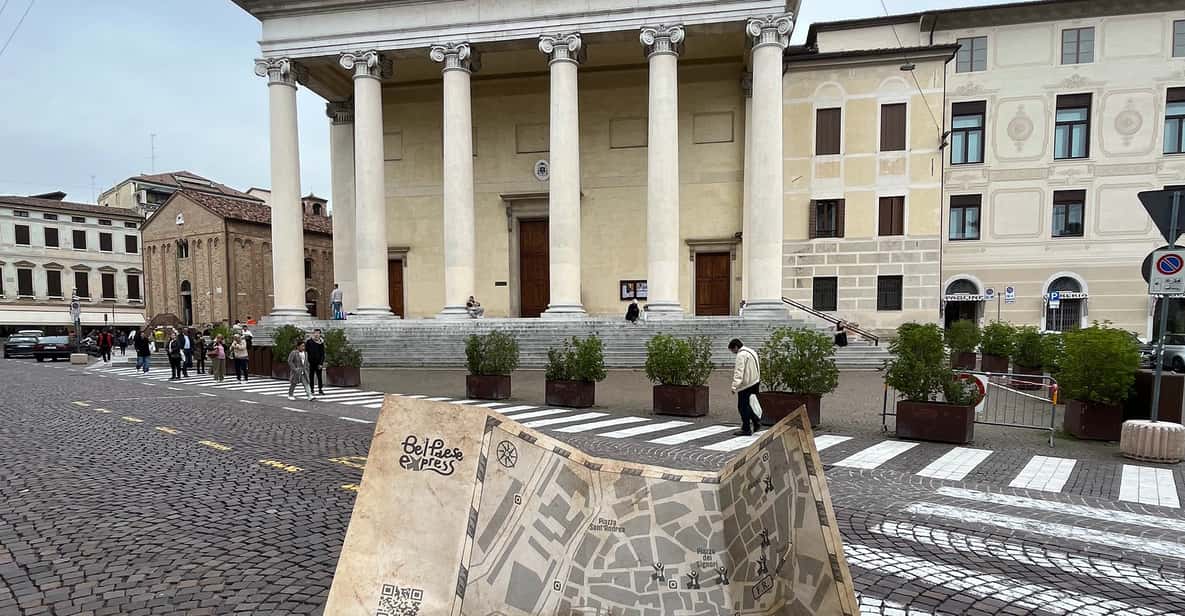
The mission starts at Piazza Pola. That’s great because it’s a clear starting pin, but it also means your first five minutes can feel like the hardest part—especially if the square is busy.
If you want this to feel smooth, treat the start like a mini checklist:
- Make sure your phone is charged (you’ll be using it for the app and map)
- Have your game code ready when you arrive
- Take a moment to orient before you start tapping through clues
One player experience flagged that crowds can make it harder to figure out the starting point. That’s not a “problem with you,” it’s just how game starts work in real public spaces. If you show up at a calmer time within the allowed hours, you’ll likely glide into the mission faster.
If you’re trying to keep costs down, the good news is price is for the group up to 5, not per person. So even if you have to slow down at the beginning, you’re still spreading the cost across your crew.
The walking route: what 2.5 km feels like in Treviso
You’re looking at an approximate 2.5 km walking experience, designed around a cultural and interactive walk. The duration is listed as about 3 hours, but the “no time limit” setup means you can stretch it a bit if you’re reading signs carefully or stopping for mini breaks.
The mission itself is aimed at helping you (re)discover Treviso’s feel: art city energy mixed with Italian village charm. You’ll be solving riddles and finding points tied to the questions in the app. That usually means paying attention at street level—where frescoes, facades, and small visual details do the storytelling.
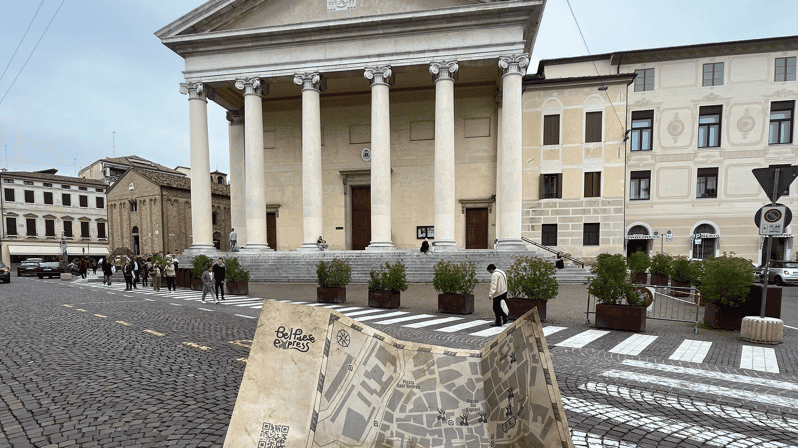
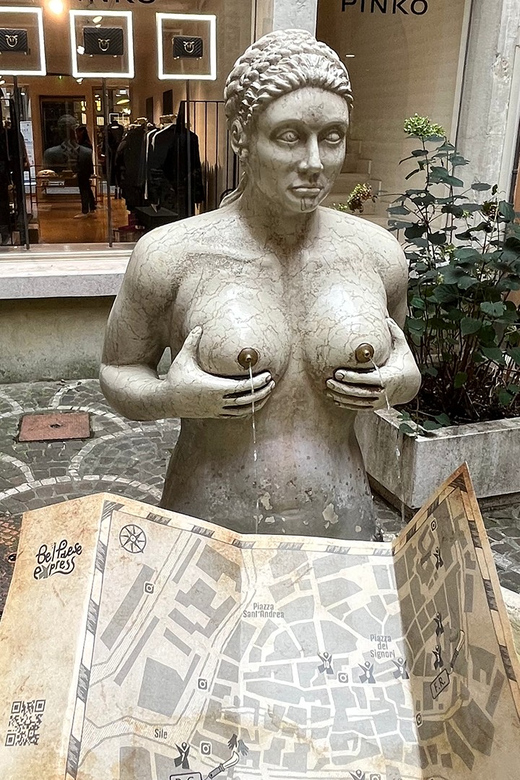
A useful clue from real puzzle behavior: one question about an artwork can hinge on wording like whether you count women versus people. If you see an image with a woman and two children, your answer needs to match the question’s wording. My advice: don’t guess fast. Read the prompt twice, then count what’s actually in front of you.
You might not see the route as a traditional sightseeing itinerary. Instead, you’ll experience Treviso as a sequence of “look again” moments. For me, that’s what makes this kind of game worth it: it turns passive walking into active noticing.
Hints, solutions, and how not to get stuck
City escape missions rise or fall on whether you can move forward when you hit confusion. Here, you’re not left completely in the dark. You have three hints available for each quest, and there’s also a solution available if you truly need it.
The trick is using hints strategically rather than like a skip button. Here’s how to do it without breaking the fun:
- If you’re stuck after a quick scan, use hint 1 to confirm what category you should be looking at (text? a symbol? a specific detail)
- If you still can’t find it, hint 2 can help you narrow the spot
- If you’re on the verge of getting frustrated, hint 3 gets you to the finish line
Because there’s no staff on site, hints are your safety net. They make the experience work for groups with different comfort levels—someone can be the “reader,” someone can be the “counter,” and someone can keep the phone moving forward.
Also, the experience doesn’t require you to use the web for answers. That’s important: you’re meant to solve using the spaces around you—signs, what you see, and simple real-life asking if needed.






Art cues you’ll actually notice while you play
This isn’t a museum scavenger hunt with a checklist that could be done anywhere. The mission leans on the idea that Treviso is full of meaningful details you would normally miss.
As you walk, you’re prompted to look at local art and visual features closely enough to answer. That could mean counting figures in a fresco-like scene, reading a phrase on a sign, or connecting the riddle to something you can spot directly where you are.
One practical mindset helps: think like a detective, not like a tourist. Tourists scan for big landmarks. Detectives scan for clues. This game nudges you toward the second habit, and that’s a big reason it gets good energy from couples and families.
And yes, it’s possible to feel mildly “seen” by the artwork when you finally understand the prompt. That’s part of the charm. Treviso starts speaking in details, not just views.
Final prize: part fun, part reality check for expectations
The final prize is included. That matters because it turns the ending into something tangible—there’s a payoff at the end instead of just finishing a route and leaving.
Still, I’d go in with flexible expectations. One experience note flagged that the included prize didn’t match what someone had assumed they’d get (they expected a spritz-style reward). That doesn’t make the activity bad—it just means the prize is best seen as a bonus, not a guarantee of a specific item you might imagine.
From a value standpoint, the prize helps justify the group price because you’re not only paying for the walk and app. You’re paying for the full experience loop: story, interaction, and an ending moment.
If you’re traveling with friends, this can be a fun way to share a final “we did it” moment without turning it into a pricey bar tab.
When you can play (and what happens during closures)
The mission runs every day except Monday and Wednesday, and play hours are 9:00am to 8:00pm. That window is generous enough to work for many travel days, but it still means you should plan around those off-days.
There’s also a specific seasonal consideration around Ferragosto (August 15th) and on Sunday: map and reward pickup points may be closed during that week. If that happens, you can still use the digital map in the app. For the prize, the workaround is to request it by email at [email protected].
One more timing tip: you’re advised to book at least 2 hours before you intend to play. Since the game code is delivered within 24 hours of the start time, you’ll reduce stress by picking a realistic start hour rather than gambling on last-minute timing.
None of these are showstoppers, but they do affect planning. If you’re visiting during Ferragosto week, I’d treat the app map as your primary tool.
Price and value for a group of up to 5
The price is $40 per group up to 5, for around 3 hours of self-guided play. That’s one of the strongest value points here, because it doesn’t punish you for traveling with people.
Think of it like a “pay once, play together” activity:
- If you’re a couple, the per-person cost becomes low fast
- If you’re a family group (where everyone can count, read, and solve), it can be cheaper than multiple separate activities
- If you’re with friends, splitting the group price makes it feel like one shared evening plan rather than a single-person ticket
You’re paying for the conversion of Treviso into a puzzle experience. That’s not the same as joining a standard guided walk, and it’s why the self-guided format matters: you’re not paying for someone else’s time; you’re paying for the game design and its interactive structure.
Who this Treviso City Escape fits best
This is well matched for groups that like to do things together while walking. I’d especially recommend it for:
- Couples who want a playful challenge instead of a purely romantic sightseeing loop
- Families looking for an activity that’s easy to run without needing constant adult supervision
- Friends who don’t mind a little problem-solving and want to explore art city details in a fun way
- Anyone who prefers a smartphone-based itinerary and doesn’t want to coordinate a meeting point with a guide
Language options include Italian and English, so you can pick the version that fits your comfort level. If you’re traveling with mixed-language skills, you’ll still be able to play since the game is structured around reading and counting what’s around you.
One more group-fit point: the game design includes hints and a solution. That’s helpful if someone in your group likes to help but doesn’t want to get stuck.
Should you book Treviso City Escape Blood red love?
If you want a Treviso experience that turns streets and art details into clues, this is a strong pick. The self-guided format works well when you like flexibility. The 2.5 km distance is a manageable chunk of walking, and the hint system means you’re unlikely to get trapped for long.
Book it if your group enjoys light detective work, counting details, and solving riddles together. Skip it (or go in with low expectations for the ending payoff) if you hate smartphone-based activities or if you want a traditional guide-led explanation of what you’re seeing.
My practical call: if you can use a charged phone, read signs carefully, and enjoy a game pace, you’ll get your money’s worth fast—especially because the price is for the group, up to five.
FAQ
What is Treviso City Escape Blood red love?
It’s a self-guided interactive city walk in Treviso where you solve riddles and complete quests using a smartphone, following a story involving investigator Lorenzo Potassa.
Where does the experience start?
The mission starts in Piazza Pola.
How long does it take?
Plan for about 3 hours. The walking distance is approximately 2.5 km.
What equipment do I need?
You only need a smartphone to play the mission. A map is included in the game access.
Do I need the internet to play?
No. It’s not necessary to use the web to play.
When can I play the mission?
You can play every day except Monday and Wednesday, from 9:00am to 8:00pm.
Is there a guide or supervisor with you?
No. The experience is self-guided, with no guides or supervisors present.